
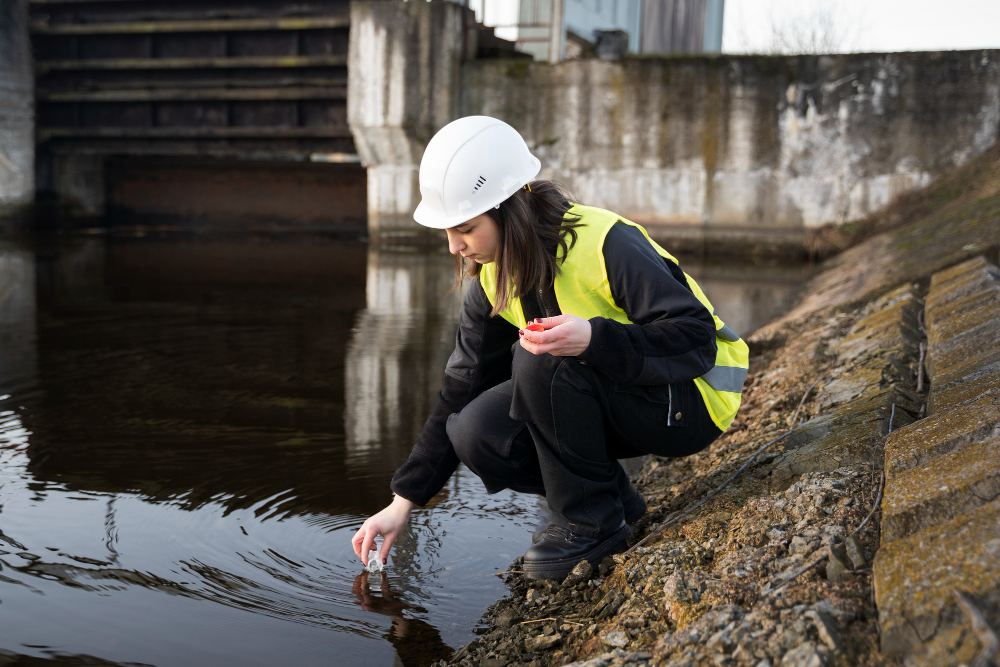
If you have ever opened a water test report and seen “coliform bacteria present,” your heart probably skipped a beat. The terminology sounds clinical and alarming. To make matters worse, the results are strictly pass or fail, leaving you staring at a piece of paper and wondering if you need to tear up your entire plumbing system or just boil your drinking water for a few days.
Many well owners and water system operators across Mississippi find themselves in this exact situation, unsure of what coliform bacteria actually are or what a positive result truly means for their daily lives.
In this guide, we are going to break down the science into plain English. You will learn why coliform testing is the gold standard for drinking water safety, what the different bacterial categories signify, and exactly what steps to take if your water fails the test.
The Truth About Coliform Bacteria
Coliforms are a large group of bacteria found in soil, plants, surface water, and the digestive systems of warm-blooded animals, including people, livestock, pets, and wildlife.
Most coliform bacteria are not harmful by themselves. They are common in the environment. They can be in wet soil, on vegetation, in ditches, in ponds, and in areas where rainwater carries organic material across the ground.
So why are they a big deal in drinking water?
Because coliform bacteria are used as indicator organisms. That means labs are not testing for coliform because every coliform bacterium is dangerous. They are testing for coliform because its presence suggests that external contamination may be entering the water system.
In other words, coliform is not always a threat. It is the warning light.
Why Labs Test for Coliforms Instead of Pathogens Directly
The bacteria, viruses, and parasites that can make people sick from contaminated water include Salmonella, Shigella, Cryptosporidium, Giardia, hepatitis A, norovirus, and others. From a testing standpoint, they create several problems:
- They occur in much smaller numbers than coliforms
- There are dozens of different pathogens to test for, each requiring its own analysis
- Each requires its own specialized, often expensive testing method
- Many can't be reliably cultured in a routine drinking water lab
- Results take days or weeks rather than hours
Instead, labs test for coliform bacteria because they often come from the same sources of contamination as harmful organisms, appear in greater numbers, and respond to water treatment similarly. That is why coliform testing is central to U.S. drinking water regulations, including the EPA’s Revised Total Coliform Rule for public water systems.
The Three Coliform Results You May See on a Lab Report
A water test may reference total coliform, fecal coliform, and E. coli. These terms are related, but they do not mean the same thing.
Total Coliform — The First Warning Sign
Total coliform is the broadest category. It includes bacteria that may come from soil, plants, surface water, animal waste, or human waste.
A total coliform-positive result does not automatically mean sewage is in your well. It may point to environmental contamination, such as stormwater getting into the well casing, a loose well cap, insects entering the system, or soil contact around a poorly sealed well.
Still, it matters. Drinking water should not contain total coliform. A positive result means there is a pathway into the system, and that pathway needs to be found.
Fecal Coliform — A Stronger Sign of Waste Contamination
Fecal coliforms are a subgroup of total coliform bacteria associated more closely with the intestines and feces of warm-blooded animals.
If fecal coliform is found in a water sample, the concern becomes more serious. The likely source is no longer just soil or vegetation. It may be sewage, manure, livestock runoff, wildlife waste, or surface water carrying fecal material.
For Mississippi well owners, common sources may include a failing septic system, inadequate separation between a well and a wastewater system, animal activity near the wellhead, or stormwater runoff over contaminated ground.
E. Coli — The Result You Should Treat Seriously
Escherichia coli (E. coli) is the most important fecal indicator in drinking water testing.
Most strains of E. coli are harmless, but their presence in drinking water usually points to recent fecal contamination. That is the part that matters. When E. coli is detected in a well water sample, you should treat the water as unsafe for drinking, cooking, brushing teeth, and making ice until the problem is corrected and a follow-up test confirms the water is safe.
A lab report that says “E. coli present” does not automatically mean the dangerous strain E. coli O157:H7 is present. But it does mean fecal contamination has likely entered the water system, and that is enough reason to act immediately.
How a Certified Coliform Test Actually Works
Certified drinking water labs use EPA-approved methods to test for total coliform and E. coli. Depending on the method, the process may involve presence/absence testing, membrane filtration, multiple-tube fermentation, or approved media such as Colilert.
For a typical residential or small-system sample, the process looks like this:
- The lab provides a sterile bottle prepared for bacteriological testing.
- The sample is collected from a proper tap using a clean sampling technique.
- The faucet may need to be disinfected, the aerator removed, and the water flushed before collection.
- The sample must reach the lab quickly. For compliance testing, EPA rules state that the time from collection to incubation may not exceed 30 hours.
- The lab analyzes the sample for total coliform and E. coli.
- Results are reported as present or absent, along with the sample details, method, and lab information.
The important part is simple: there is no “safe amount” of total coliform or E. coli in drinking water. Any presence deserves follow-up.
What Causes Coliform to Show Up in Mississippi Wells
Mississippi’s climate makes well protection especially important. Heavy rain, saturated soil, warm weather, hurricanes, tropical systems, and high water tables can all expose weaknesses in a private well.
Common causes of coliform in Mississippi well water include:
- A cracked, loose, missing, or poorly sealed well cap
- A damaged well casing
- Older wells without proper grout sealing
- A wellhead located in a low area that floods
- Stormwater or surface runoff reaching the well
- Nearby septic systems or drain fields
- Manure, livestock, or animal waste near the well
- Recent pump repair, plumbing work, or well maintenance
- Insects or small animals entering the well casing
- Sinkholes, shallow groundwater pathways, or poor natural filtration
Here is our blunt take: a positive coliform test is usually not “bad luck.” It is usually a clue that the well system has a physical vulnerability. Shock chlorination may temporarily clean the system, but if the pathway remains open, the bacteria can return.
That is why the fix should not stop at disinfection. You need to find how the contamination got in.
What to Do If Your Well Water Tests Positive
Your next step depends on what the lab found.
If Total Coliform Is Present but E. Coli Is Absent
Do not panic, but do not ignore it.
Start with a physical inspection of the well. Look for a damaged cap, poor drainage around the wellhead, cracks in the casing, nearby septic concerns, or signs that surface water may be entering the system.
Then:
- Repair any obvious defects
- Shock chlorinate the well if recommended
- Flush the system properly
- Retest with a certified lab after chlorine has cleared
Do not assume the water is safe just because it looks, smells, or tastes normal. A clean follow-up test confirms that the problem has been resolved.
If E. Coli or Fecal Coliform Is Present
Treat the water as unsafe.
Use bottled water or properly boiled water for drinking, cooking, brushing teeth, making baby formula, washing food, and making ice. Then investigate the source right away. E. coli or fecal coliform usually points to a fecal contamination pathway, such as sewage, septic failure, animal waste, or contaminated surface water entering the well.
The response should include:
- Stop use of water for consumption immediately
- Inspect the well and nearby contamination sources
- Repair the underlying issue first
- Disinfect the well and plumbing system
- Retest through a certified laboratory
For public water systems, E. coli results also trigger regulatory reporting and public notification requirements under federal rules.
Take Control of Your Water Quality Today
Coliform testing is a core part of drinking water safety at every level, from federal and state programs to municipal systems and private wells. It is one of the first things regulators review, lenders often require, and homeowners should test for annually, even when the water looks, smells, and tastes normal.
If you’re somewhere between Jackson and the Coast and you need certified coliform testing, Bonner Analytical Testing Company in Hattiesburg holds the credentials that matter:
- Mississippi State Department of Health Certified for Microbiology
- EPA ID: MS00013
- USEPA Contract Laboratory Program (CLP) Certified
- Standard Methods and EPA/600/4-91/002 — since 1981